Ahalaken: From Podcast to AI-Generated Film in Basque

At EITB Lab, the innovation unit of the Basque public broadcaster, experimentation is part of the daily routine. The team constantly explores how technology and new formats can open bridges to younger audiences. Ahalaken began in that spirit — as an eight-episode audio fiction inspired by a startling archaeological discovery in Irulegi, Navarre: a bronze hand inscribed with what is believed to be the oldest known text in Basque, dating back to the first century BC. That ancient artifact sparked a bold idea — to imagine a fictional origin story for a language whose true roots remain a mystery.
The innovation behind Ahalaken
What started as an audio podcast evolved into something much more ambitious. They took two bold steps: First, using AI voice cloning to revive a beloved Basque cultural figure. Second, to produce an original visual version, based on the real voices of the actors who had recorded the podcasts, and to do it in Basque.
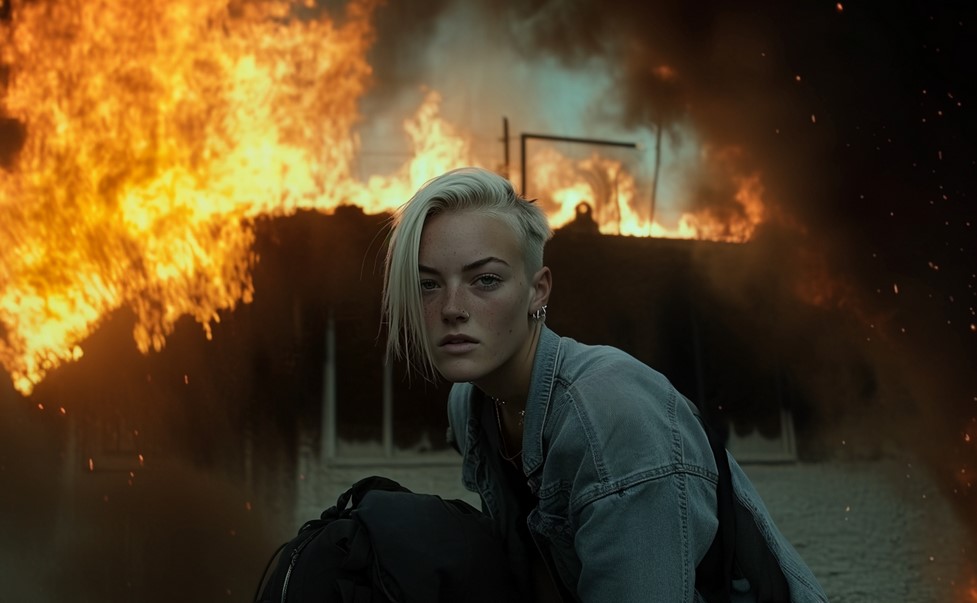
EITB Lab partnered with Barcelona-based Artefacto Films to transform the original audio episodes into 90-second visual stories, later woven together into a 10-minute short film designed for digital platforms and social media. These visuals didn’t just extend the reach of the original audio; they added a new emotional and cultural layer that sound alone couldn’t fully convey.
The technical pipeline
Artefacto built a custom pipeline that merged proprietary and open-source tools into a multi-stage process covering concept art, animation, facial performance, voice, and postproduction. The workflow was intricate, but cohesive:
- MidJourney generated concept art that set the visual tone for the series
- Flux AI ensured character consistency across episodes, a critical challenge in episodic storytelling
- Runway Gen-2 breathed life into still images, especially for non-human elements
- Kling 1.6handled the delicate balance of facial animation and lip-sync, syncing emotion and voice with uncanny precision
- Live Portrait AI delivered surprisingly strong results, laying the groundwork for what followed
Sound design followed a similar path of innovation:
- MM-Audio Suite transformed scripts and raw audio (based on real performances by the cast) into full soundscapes without traditional recording studios
Postproduction relied on
- Adobe Firefly for inpainting
- Topaz models for upscaling and denoising, polishing every frame for distribution.
Every step of the way, the priority was to honor the tone and rhythm of the original performances while creating visuals compelling enough to stand on their own.
Key challenges and learnings
Working with AI was far from seamless. The technology amplified possibility, but also magnified frustration. Prompts were often misunderstood, forcing endless cycles of trial and error. Basque language filters flagged words as inappropriate, requiring creative workarounds. Small but vital details — a piercing, a subtle scar — were notoriously hard to keep consistent. Anatomical quirks meant shots stayed tight and contained, and most tools struggled to produce clips longer than ten seconds, pushing editors toward a fast-cut, rhythmic style. Lip-sync and facial expression were the toughest hurdles: in the early stages, only 1 out of 70 generated images was usable, though newer models dramatically improved that ratio.
Through these challenges, Ahalaken became more than a project. It became a laboratory for the future of AI in media. The lessons learned point to what’s next:
- AI systems capable of 'narrative memory', where characters can evolve emotionally across scenes
- Longer, smoother clips that don’t require stitching
- Multimodal prompts that merge text, audio and visuals in a single command
- Built-in ethical transparency, from watermarking to blockchain certification.
For creators, the experience also offered practical wisdom:
- Stay ahead of the curve, because tools evolve every month
- Budget more time and computing power than expected, because iteration is the hidden cost
- Bring legal experts in early, especially when dealing with voices or likenesses
- Label AI-generated material transparently
- Document every step, because process matters as much as outcome.
Conclusion
Ahalaken never set out to prove that AI could replace creativity — and it doesn’t. What it shows, instead, is that AI can push creativity to evolve. And in the case of a minority language like Basque, it suggests something even more powerful: that these tools — when handled with care — might help cultural voices not just survive, but resonate far beyond their traditional borders.


