How The Pack turns game engines into story machines

For decades, film and TV production have followed pretty much the same path, while game technology sprinted ahead in another lane. Belgian digital studio The Pack decided to jump the fence between those worlds and build a bridge: using game engines not only for games, but as full-blown film creation tools.
The result is a new kind of VR storytelling that feels like cinema, behaves like a game and opens the door to all kinds of hybrid formats.
From green screen sets to virtual stages
Traditional production pipelines are slow and fragile. You shoot footage, send it through a maze of compositing, rendering and postproduction, and hope it all comes out the other end on time and on budget. Meanwhile, game engines give you real time lighting, instant previews and worlds that you can actually walk around in.
The Pack saw the opportunity hiding in that contrast. Instead of treating game engines as a side tool for interactive extras, they made them central to their storytelling.
Their latest project, "The Sad Story of the Little Mouse Who Wanted to Become Somebody", selected for the Venice Immersive program, is a showcase of that idea. It is a VR narrative that feels like a classic film in terms of mood and direction, but is built and delivered through a game engine workflow.
SYNK: The secret sauce
Of course, you do not transform an entire industry by telling animators to forget everything they know and learn a game engine from scratch. To avoid that trap, The Pack built its own production backbone: SYNK.
SYNK is a real time pipeline that connects Unreal Engine and Unity and even Roblox with the usual suspects of animation and postproduction, like Maya, Blender, Adobe Premiere and DaVinci Resolve. Artists can keep working in the software they love, while the engines quietly act as the central hub that pulls everything together.
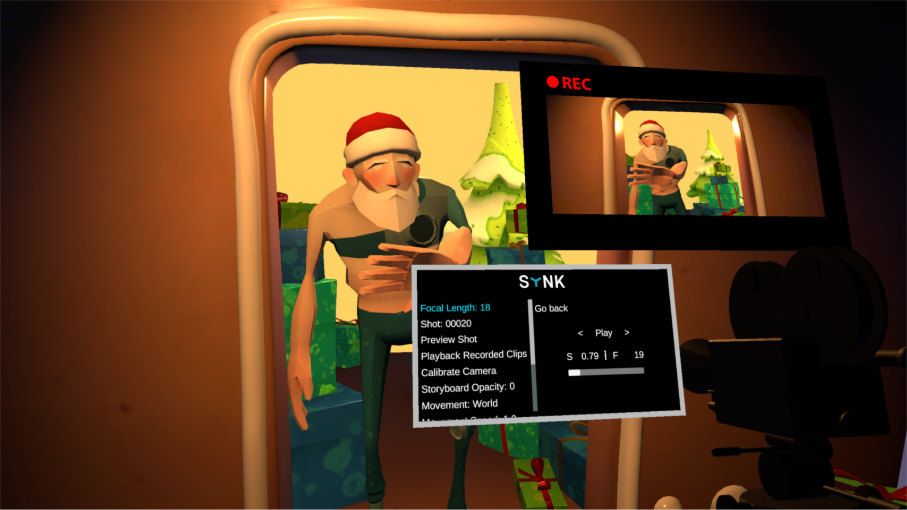
The goal is simple: keep artists in the tools they know, while the engine handles the rest in the background.
- Animators keep working in Maya or Blender
- Editors cut scenes in Adobe Premiere
- Colorists can still use DaVinci Resolve
Behind the scenes, SYNK pushes assets and updates into Unity and Unreal for real time rendering and VR output.
This same backbone allowed The Pack to deliver their first feature film fully rendered inside Unity in 2022. Instead of waiting hours for every version, the team could see near final images in real time, complete with water effects, reflections and dynamic lighting. The bonus: once a world exists in Unity, it does not have to stay stuck in one format. The same assets can live on:
- on a cinema screen
- inside a VR headset
- or in other interactive experiences
No need to rebuild everything from scratch for each platform.
A VR mouse, a sad story and a very smart camera
That philosophy comes back in their VR film “The Sad Story of the Little Mouse Who Wanted to Become Somebody”, selected for the Venice Immersive competition. Here, The Pack mixes hand drawn 2D animation with 3D environments and uses its own VR camera tools to stitch everything together.
The director can literally step into the virtual set with a headset on, grab a virtual camera, walk around the scene and record shots as if standing on a real soundstage. Storyboards and timelines from Premiere float in the same space, so you always see where you are in the film.
While that happens, animators keep working with complex character rigs in Maya. Thanks to SYNK, their updates appear in Unity almost instantly, ready to be reviewed on an ordinary graphics card. You do not need a high-end render farm to see the latest version of the film. You just hit play.
Production metadata travels along the same route. Scenes, takes and versions stay linked from first idea to final master, which makes the whole pipeline feel less like a patchwork of tools and more like a single, living system.
Why Unity, not Unreal?
In a world where Unreal Engine often dominates the headlines, The Pack’s choice for Unity might raise eyebrows. The reason is surprisingly practical. When they started building this workflow, Unity already had two crucial features in place: a mature timeline system and Cinemachine, a powerful virtual camera toolkit. Those tools were essential for creating linear, film-style content. Unreal only added similar options later.
Since then, Unity has also proven easier to manage VR in their specific setup, so it made sense to keep building on that stack. That does not mean Unreal is off the table as SYNK now supports it as well, but it shows an important lesson: the “best” engine is the one that actually fits your production needs at the time you start.
What media companies can take from this
The Pack’s story is not just relevant for animators who love shiny new tools. It sends a broader signal to broadcasters, studios and content producers.
A few takeaways:
- Engines as an alternative render pipeline
Unity and similar engines are not just for games. They can sit at the center of a production, especially when you need to deliver the same story on multiple platforms. - VR does not mean starting from zero
You do not have to throw away your existing workflows. With the right bridge, filmmakers can keep their familiar tools while gaining the benefits of real time previews and virtual sets. - Choose the engine that fits the job
The Pack picked Unity because of its timeline system and camera tools, which were crucial for linear storytelling when they started. Unreal has since caught up in many areas, but the core lesson is: let your production needs decide, not the hype. - Think in worlds, not just in formats
When a story world lives in a game engine, it becomes much easier to move it between cinema, VR and other interactive experiences. That flexibility is increasingly valuable as audiences expect more immersive content.
Looking ahead
The Pack keeps expanding its toolkit, experimenting with large screen gaming experiences, new types of VR storytelling and other hybrid formats where cinema and interactive media blend together.
Their journey from a tricky green screen feature in 2014 to a Unity rendered animation film and an award-nominated VR mouse story shows what happens when you treat game engines as full-blown film creation tools.
For media organisations wondering how to cut costs, reach new audiences and explore interactive formats without sacrificing quality, The Pack offers a clear message: you do not have to choose between games and film. With the right pipeline, you can have the strengths of both in one workflow.


