Nyhetskoll: dialogue-driven news for teenagers

How do you build trust with teenagers in a fragmented social media landscape? Swedish public broadcaster SVT and educational broadcaster UR address this challenge through Nyhetskoll, a news initiative specifically designed for 13–19-year-olds. Combining a weekly educational format with a strong social media presence, the project focuses not only on delivering news, but also on creating dialogue and relationships with young audiences.
A cross-platform news concept for teenagers
The initiative combines two core components: a weekly programme connected to schools and a daily presence across digital platforms. The weekly programme combines stand-alone explainers, quizzes and educational news content that teachers can integrate into the classroom, helping create a direct connection between the editorial team, schools and students while making current affairs more accessible in education.
Alongside the weekly show on UR Play, Nyhetskoll reaches teenagers daily through its news app, SVT Play, and social media platforms including TikTok, Snapchat and YouTube. Teenagers who discover Nyhetskoll in the classroom are encouraged to follow Nyhetskoll on social media, while followers on social platforms are introduced to the educational content shown in schools.
Platform specific strategies for younger audiences
Rather than applying the same content everywhere, Nyhetskoll adapts its formats and tone of voice to each platform and audience segment.
On Snapchat, where Nyhetskoll mainly reaches 13–16-year-olds, the focus is on short clips, interaction and dialogue. Through question boxes, polls and comment interactions, the team asks young audiences about their opinions, experiences and concerns. The editorial tone is intentionally positioned as “the smart and trustworthy older sibling”: relatable and informative. Reporters play a central role in this strategy, with Nyhetskoll actively building recognizable personalities that young audiences can connect with and trust.
On YouTube, Nyhetskoll focuses heavily on platform-native formats and visual identity. Videos are designed specifically for the feed with more “YouTubeified” thumbnails and editing styles: more attention-grabbing visuals, clearer titles and storytelling styles that feel native to YouTube rather than traditional television content. The team experiments with both shorts and longer videos, ranging from 1 - 20 minutes.
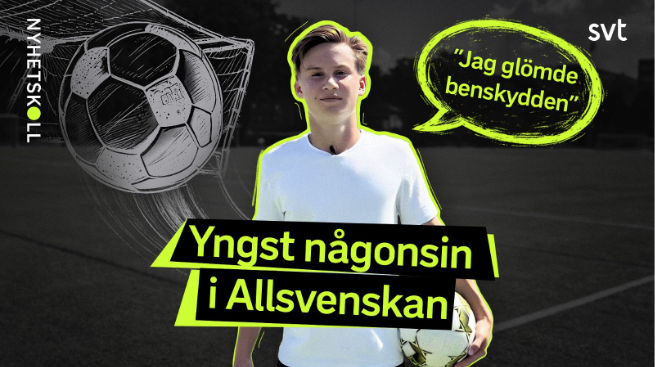
Two of their most successful YouTube formats include short interviews, where politicians only have 30 seconds to answer questions from a reporter, and longer stories following young Swedish athletes in their hometowns. The platform is not just used for news, but also for explanatory content, personal stories and discussions connected to topics that are relevant to younger audiences.
Experimentation through analysis
A major part of the Nyhetskoll strategy revolves around constant testing and performance analysis. Every week, the team reviews engagement metrics, audience growth and competitor activity across platforms. SVT and UR track likes, comments, shares and saves to calculate an overall engagement score for each video. Videos are then ranked internally to analyse why some formats perform better than others. One important metric for TikTok is the “share rocket”: videos that surpass 3,000 shares are analysed closely to identify patterns behind their success, such as topic choice, storytelling style, pacing or emotional triggers. This helps the team better understand what resonates with younger audiences.
Next to that, weekly competitor reviews are carried out to compare how other creators and media brands approach similar topics and formats. This process helps identify trends, missed opportunities and platform-specific best practices.
Beyond pure performance metrics, the editorial team also closely monitors demographic shifts, including age and gender differences among followers, to better understand how the audience evolves over time.
Why dialogue with the audience matters
For SVT and UR, engagement is not simply a performance metric. Dialogue itself is considered part of the journalistic process. The Nyhetskoll team believes interaction helps build trust in both the reporters and the public service brand. By responding to comments, asking questions and involving young people in conversations, they try to move beyond one-sided communication.
This dialogue also creates a gateway into journalism itself. Young audiences don't only consume content, but also contribute ideas, perspectives and story leads. The team described several examples where interactions on social media directly influenced editorial decisions or uncovered new cases that are relevant to teenagers. For example, through a simple Snapchat question box, the team asked teenagers about the biggest problems they experience at school. After reviewing the responses, one issue repeatedly came back: students felt they had too little time after PE classes to shower and prepare for their next lesson.
The team developed the story further by interviewing students in Stockholm about how much time they actually get and how they experience the situation. They even obtained a class schedule showing that some schools only had 10 minutes to shower, change and make it to their next class. To make the story even more relatable, the reporters decided to test the situation themselves. “We worked out at the gym and then tried to get back to the newsroom within 10 minutes while filming the entire challenge,” Mathilda Bridfelt, reporter at UR, said. “Safe to say, we didn’t make it.” The video became highly successful both in the weekly programme and on social media, especially among younger audiences who immediately recognised the issue from their own daily lives. The Snapchat interaction not only created engagement, but also directly resulted in a new editorial story angle and valuable audience input for future reporting.
This strategy reflects a broader understanding that young audiences are interested in news, but expect it to be delivered in formats and spaces that feel relevant to them. Rather than adapting traditional television journalism to social media, Nyhetskoll embraces native platform behaviours, creator-style storytelling and continuous audience interactions.
Key takeaways for media organisations
What can other media organisations learn from Nyhetskoll'sapproach to youth news?
- Platform-specific content matters. Nyhetskoll adapts formats, tone, personalities and editing style for each platform instead of repurposing identical content everywhere.
- Dialogue should be part of the editorial strategy, not just marketing. Interaction can build trust, generate story leads, strengthen audience relationships and improve journalism.
- Success metrics go beyond views alone. Nyhetskoll places strong emphasis on shares, engagement quality and conversation, while using continuous weekly analysis to identify trends, platform changes and audience behaviour early on.
By combining education, platform-native storytelling and continuous audience dialogue, Nyhetskoll shows how public service media can build more relevant and engaging news experiences for younger generations. Instead of treating teenagers as passive consumers, the initiative actively involves them in the journalistic process, turning interaction, feedback and conversation into a core part of both the content strategy and newsroom approach.


