SXSW 2025: Amy Webb predicts the arrival of Living Intelligence

After the 2024 technology supercycle, we have now entered the era of Living Intelligence (LI), a fusion of AI and biotechnology advancements. Amy Webb, a key figure at South by Southwest (SXSW) for nearly two decades where she unveils hundreds of trends each year before an audience of captivated enthusiasts, observes that we have crossed a threshold: we are in the Beyond, a space where technology evolves faster than our ability to grasp its medium- and long-term impact.
First, the open-source futurist (whose 1,000-page report is available for free) invites her audience to sit on the small wooden blocks handed out to the lucky participants of her keynote, "to feel the equivalent of a pebble in the shoe," an obstacle preventing us from making good decisions—this stone symbolizing, for example, the obscene volume of articles published daily on AI. A parallel with a figure: by 2030, more than 125 billion connected devices will continuously generate behavioral data, enhancing the ability of Large Action Models to learn and act autonomously. Now, imagine connecting them directly to biological matter…
For Amy Webb, we have crossed a threshold: we have entered the "Beyond." Beyond possible explanations, we have moved past a world that science could still fully describe, especially when considering that, according to the latest research, the average amount of plastic in our brains could be equivalent to the size of a plastic spoon.
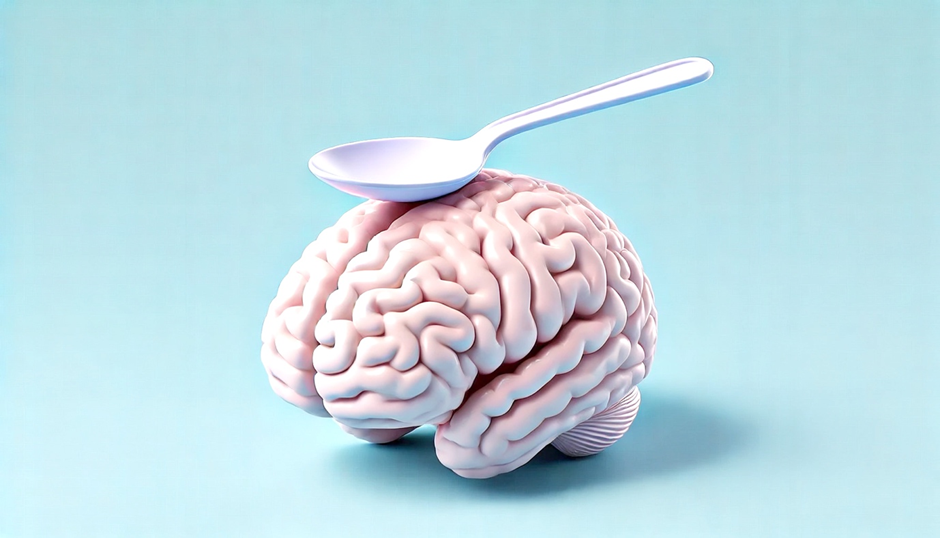
Illustration : DALL_E + KB
Neural networks now operate as black boxes, where statistical correlations learned from billions of parameters produce results that are difficult to trace back to comprehensible or predictable rules (ultimately as unpredictable as humans). Meanwhile, the concept of a human enhanced by science is no longer a utopia, as illustrated by the idea of the Enhanced Games—a competition where human body optimization is taken to the extreme, with athletes boosted by the most advanced technologies and substances. This concept has already attracted investors, including Peter Thiel, among others.
The only restriction: staying alive until the competition. Everything is advancing so rapidly that we barely have time to define the boundaries of progress—something that plays into the hands of certain companies. Even the world’s most renowned futurist struggles to make sense of it, situating us in this nebulous "Beyond." We have shifted from FOMO (Fear of Missing Out) to FOMA (Fear of Missing Anything). The pace is relentless: "What’s bleeding edge today might be old news later today."
AI & Sensors, a Winning Team
The first of the three clusters highlighted in her presentation this year (in 2024, the key themes were AI, IoT, and biotech) is AI + Sensors. AI and Large Language Models are becoming increasingly accessible: DeepSeek has demonstrated that massive infrastructure is not necessary to achieve advanced performance, and Stanford has followed this trend by unveiling S1, a model costing a mere 50 dollars.
But the real breakthrough lies in MAS (Multi-Agent Systems), which are capable of collaborating, distributing tasks, and supervising one another—all without any human intervention. The results can sometimes be unsettling: Amy references an experiment conducted by DARPA, as well as another in which agents introduced into the Minecraft gaming platform, left unsupervised, first established their own laws and regulations before ultimately creating new religions.
Presentation Amy Webb
With a troubling realisation: our natural language, on which Large Language Models are based, actually slows down the work of these artificial agents, which prefer to communicate without bias or misinterpretation. As always, Microsoft has a solution—this time in the form of DroidSpeak. We are returning to machine language, as these systems no longer need us.
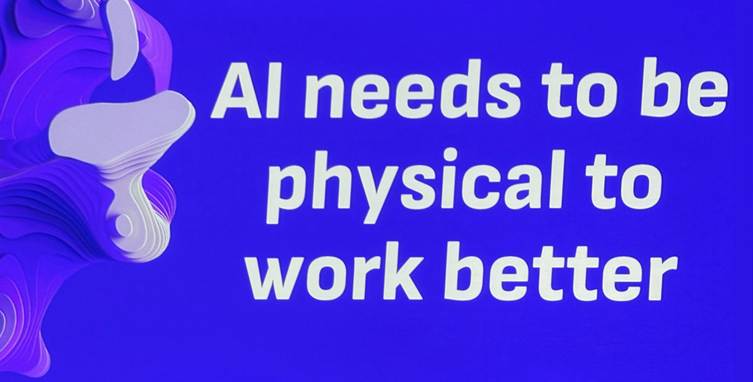
Jensen Huang had already stated it at CES (see the article on the event this year): AI must become "physical" (or embodied) to progress. And in this phase, it may still require a touch of biological matter, as seen in the example of RoHM, Robust Human Motion Reconstruction via Diffusion, developed by Siwei Zhang.
And what better embodiment of AI than through our brains? We have long been able to reconstruct the narrative of our dreams, so why not use brain cells to power neural networks?
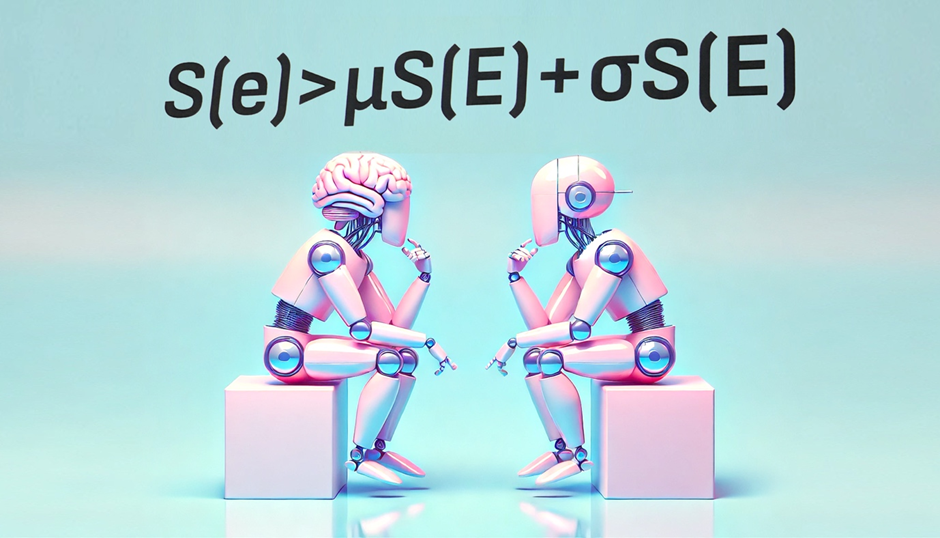
Illustration : DALL-E + KB
Embodied AI will ideally rely on a Model Context Protocol, much like HTTP for the Internet, enabling the connection of data from AI-powered sensors. The challenge is to link AI models to sensors for a more seamless interaction between the physical world and algorithms.
The ultimate embodiment of this technology remains our own brain, which is not only capable of recording data but also replaying it, paving the way for advanced forms of digital memory. In this dynamic, sensor networks are transforming AI, shifting it from a mere observer to a controller, directly influencing its environment.
But how far should this fusion go? What happens if, tomorrow, your employer requires you to get an implanted chip—courtesy of Elon Musk?
AI & Biology: Pushing the Boundaries of Matter
The second cluster presented, in the same vein, is the combination of AI and biology. The fundamental rules of this scientific discipline are being disrupted just as much as those of our old media world. Generative biology is making its way forward—once again, faster than our ability to grasp it.
AlphaFold 3, developed by Google's DeepMind, represents a breakthrough in computational biology. Its publicly accessible server enables unprecedentedly accurate predictions of protein structures and other biomolecules.
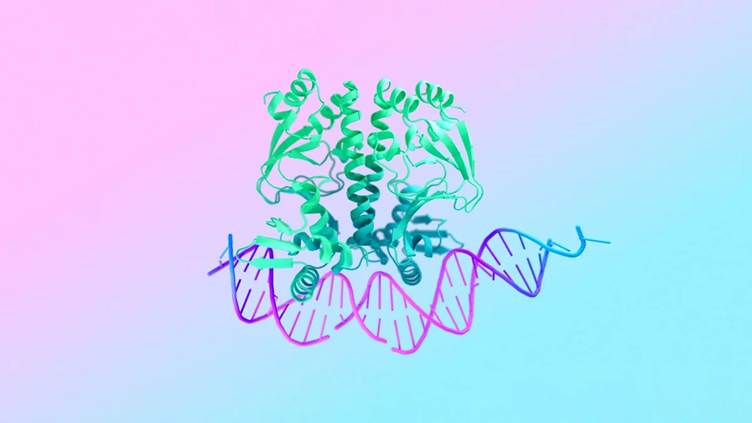
Google Alpha Fold 3
For instance, AlphaFold 2 had already predicted the structure of more than 200 million proteins, covering virtually all those known to science. The new version goes even further by integrating complex molecular interactions, with direct implications for drug design and biotechnology. This type of tool is not limited to academic research—it is also reshaping the strategies of companies working on physical products, whether in materials, therapies, or agriculture.
Forget the metaverse—too abstract—make way for metamaterials: synthetic materials that surpass the limits of traditional chemistry and the periodic table by introducing new properties and unprecedented behaviors. Innovation will thus push the boundaries of the physical world. Amy Webb then explores scenarios that are anything but skeuomorphic: rice combined with cow proteins, human teeth grown in pigs (actually, that one is already a reality), a building wall functioning like a human brain or exhibiting elastic properties, and finally (here we are), the use of human brain cells to accelerate AI computation—a potential answer to the massive energy demands of these technologies. Meanwhile, Microsoft's new nuclear power plant at Three Mile Island, now renamed the Crane Clean Energy Center, is set to open in 2028…

Rice boosted with cow proteines, picture : DALL-E + KB
The Australian startup Cortical Labs is growing real neurons directly on custom chips, creating an intelligence that "learns intuitively with remarkable efficiency." Utopia? Cortical Labs has just unveiled CL1, the first functional bio-computer, priced at $35,000, outpacing FinalSpark, a Swiss startup also working on the first bioprocessor as an alternative to conventional chips.

The rules of computing are being upended with the arrival of the first living machine…
Biology & Sensors, and AI
The third cluster presented by Amy Webb is the combination of biology, sensors, and AI, ushering in a new era of hyper-efficient robots that are far less clumsy than their predecessors. Interfaces between biology and technology are becoming more refined, with innovations pushing the boundaries of the living world. Shoji Takeuchi is exploring the concept of the Skin Mask, an organic interface that could merge with human skin, while asserting that, in a way, we are all "squishy robots." In the same vein, themechanism of flagellar motorobserved in bacteria, should allow modified microbes to generate their own electricity, paving the way for autonomous bio-machines...
Innovation does not stop there: after the sperm bots introduced in 2016 by German researchers, biological wearables are emerging as a complement to traditional pharmaceuticals—not for humans, but for their cells. These devices could guide, repair, or optimize the function of neurons or even gametes, further deepening the fusion between the living and the artificial. Will microscopic machines grant us power over nature? If so, why not consider synthetic rhinoceros skin as an alternative to metal?
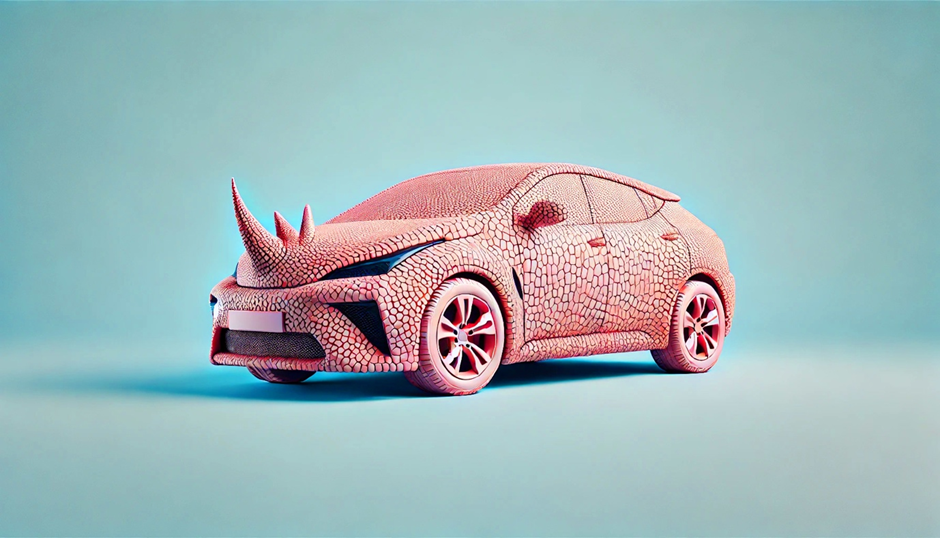
Image created by DALL-E + KB
According to Amy Webb, the era ahead goes beyond artificial intelligence as we understand it today: a living intelligence is emerging, blending AI, biology, and the physical world into an interconnected ecosystem. Yet, we are not ready. Everyone is focused on isolated advancements without stepping back to grasp the bigger picture. Robotics is already undergoing a profound transformation. For years, robots stagnated, unable to handle the chaos of the real world—a major obstacle to their adoption outside controlled environments. But things are changing: Google’s DeepMind has just taught a robot to tie its own shoes, a seemingly trivial achievement that nonetheless marks a breakthrough.
Machine autonomy in complex everyday tasks is no longer just a theoretical projection—it is becoming a reality. Anand Mishra is exploring a new frontier in robotics with hybrid machines that merge biology and technology.
One of the most striking examples is a robot with a brain made of fungi, blending organic and artificial elements to create an alternative form of intelligence. This biohybrid approach is also seen in projects like the robotic jellyfish developed by Caltech, which combines living organisms with mechanical structures using 3D printing—a highly useful technology for long-duration space exploration.
After decades of promises and limited prototypes, the era of robots finally seems to be a tangible reality, with machines that do more than simply imitate humans.
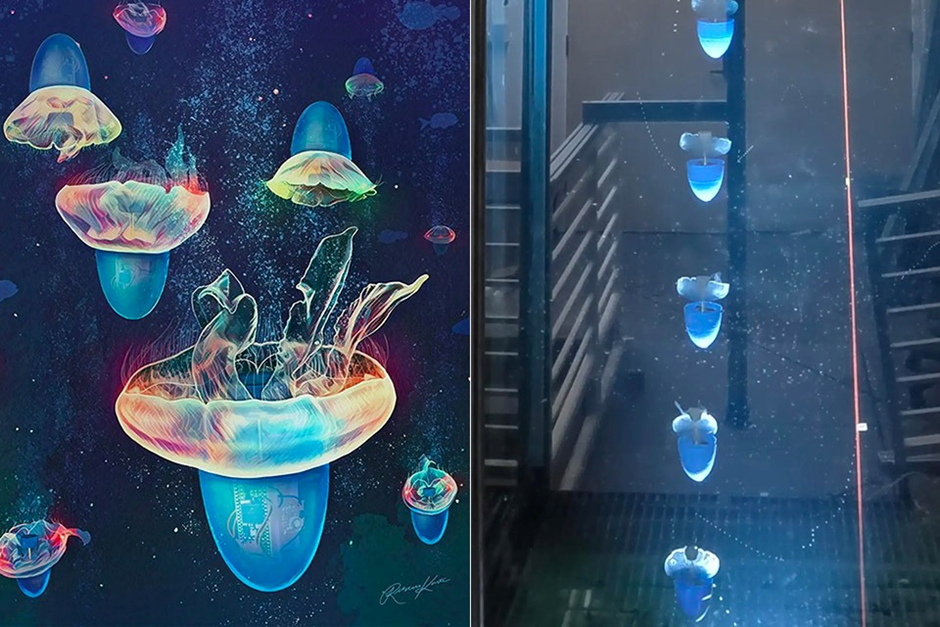
Caltech
From Abstract AI to Embodied AI: Why It Concerns Us All
Why are Big Tech companies investing so heavily in robotics? Because robots are a fundamental requirement for achieving Artificial General Intelligence (AGI). Without physical embodiment, AGI remains an abstract concept, unable to fully interact with the real world. Just as human intelligence cannot exist without a body to perceive, act, and learn, a truly autonomous artificial intelligence needs a physical form to surpass the limitations of purely digital processing. For tech giants, robotics is not just a market—it is a necessary step toward AI that is fully integrated into the material world.
This evolution is accelerating, and we should not remain mere spectators.
We might then ask ourselves: how does this concern us, in the media industry? The answer is simple—and twofold. These technologies, from computer vision to robotics, will inevitably impact our tools and professions in the years to come. But more importantly, they will transform society as a whole. Even though not all of these technologies are fully deployed or completely mature yet, it is already crucial to consider how we envision our coexistence with AI systems that may become increasingly powerful… unless they collapse from intellectual exhaustion in the near future.
It is not enough to spot trends; they must be transformed into actionable scenarios, tailored to each company, or else we risk settling for hollow predictions. The Future Today Institute has understood this well: by rebranding itself as the Future Today Strategy Group, it is making its ambition clear—to drive change rather than passively watch Living Intelligence take the reins. As AI takes shape, merges with biology, and colonizes the physical world, we continue to debate it as if the future were patiently waiting for us. But who will truly shape what comes next—human-driven strategies or algorithms left to their own devices?
AI needs embodiment to move forward. But we, as humans—what do we need?
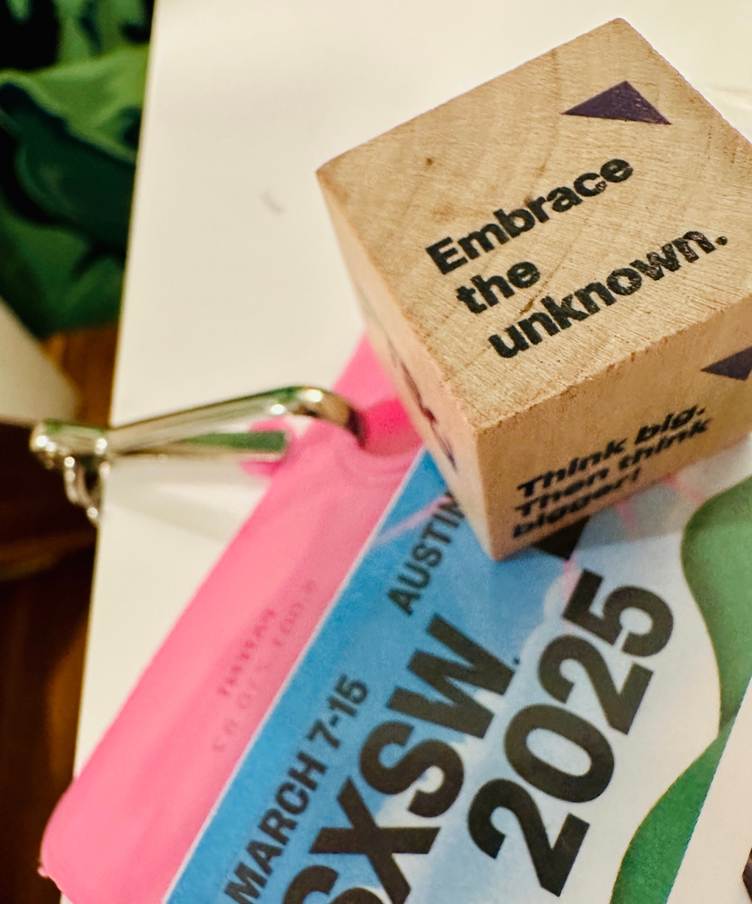
The small wooden dice mentioned in the introduction.
Take-aways
The 10 key takeaways from the 1,000-page report, according to Amy Webb:
- Living Intelligence: AI, sensors, and biotech are merging to create autonomous and adaptive systems.
- Action Models: AI is shifting from speech to action, redefining automation.
- Autonomous Robots: Advancements in adaptability are allowing them to move beyond factories.
- Agentic AI: Systems are making their own decisions and enhancing human expertise.
- Tech Alliances: The demand for data and computing power is driving former rivals to collaborate.
- Climate & Innovation: Crises are accelerating the adoption of new technologies.
- Nuclear Comeback: AI is fueling investments in small modular reactors.
- Quantum Computing: Error correction is paving the way for practical applications.
- Metamaterials: New structures are revolutionizing engineering.
- Cislunar Space: Private investments between Earth and the Moon are transforming space commerce.


