Audio description at VRT: ‘You can think of a programme with audio description as a real listening game’

In the new VRT 1 programme ‘Niks te zien’ (Nothing to see), everything revolves around sound. Karl Meesters - 43 years old, passionate about music and visually impaired - sets out with musicians in search of specific sounds. Together, they try to capture the beauty of sound. This love of sound is also ingrained in many other VRT colleagues. Guido Godon has been working at VRT for almost 40 years, currently as voice director audio description at VRT Accessibility.
Audio description, or AD for short, is adding a narrative voice to existing programme content to make it more accessible to the blind and visually impaired. VRT has been doing this for about 10 years now. In those 10 years, Guido Godon, as voice director, was one of the people who saw the whole evolution happen. What audio description was in the beginning to what it has become today. “In essence, it still comes down to the same thing: we want to meet the need of blind and visually impaired people to follow our programmes with audio description. However, there are some differences from the past. What kind of programmes we provide with audio description, the writing, the use of language and the way we tell a story.”
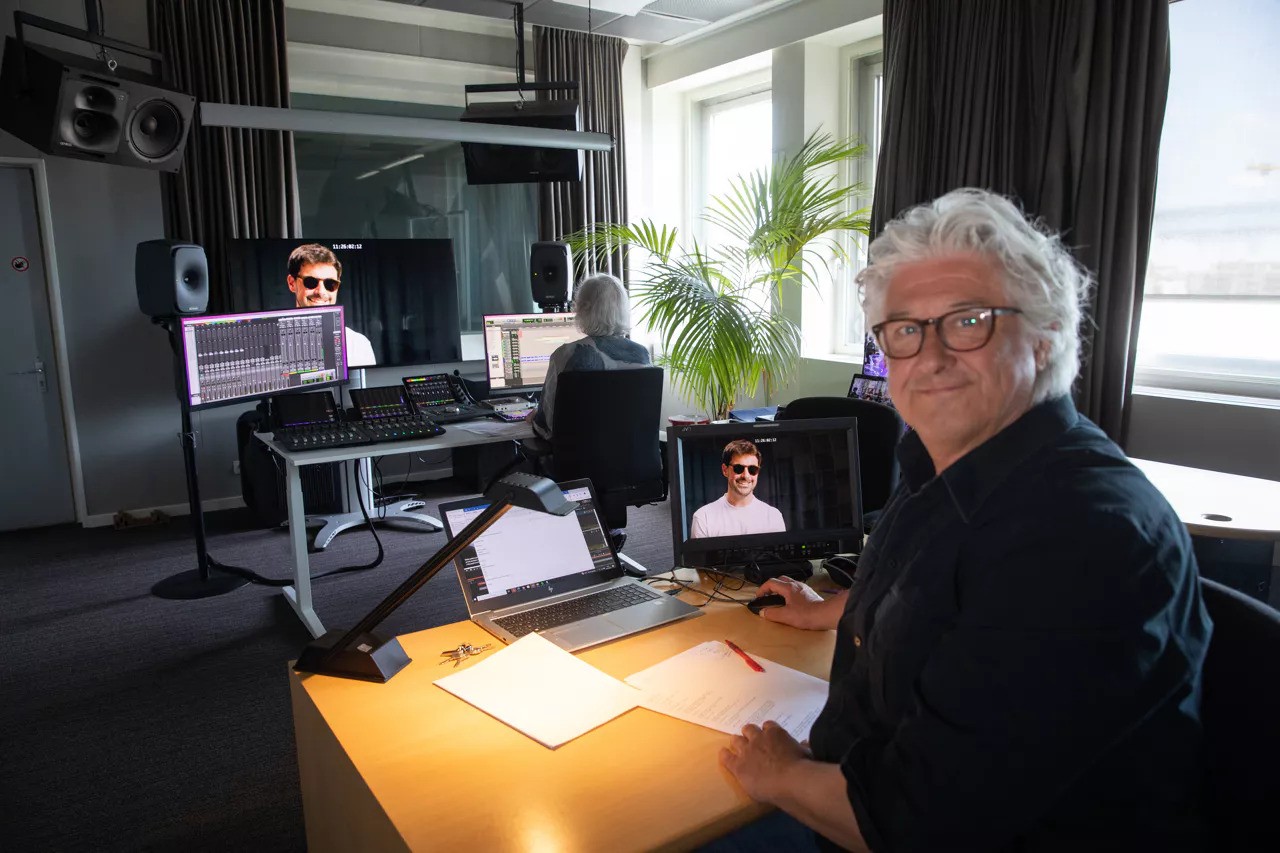
From fact to story
In the early days of audio description, VRT worked with the University of Antwerp to develop a manual for audio description. But soon the audio description team came to the conclusion that such a manual does not always work. “Audio description is often millimetre work and you have to do everything piece by piece, sentence by sentence. Sometimes it's really about points and commas that have to be changed last minute to achieve a good narration. In the early years, a good narrative was mainly a very factual narrative. It was out of the question back then to have audio description as an actor joined in your programme. Audio description had to be a pure telling of the facts. Of course, that doesn't appeal to anyone and comes across as boring. Besides, every movement and every expression was included in the audio description, which sometimes made it so crowded that it was no longer manageable for our audience.”
Thus, Audio Description at VRT evolved towards narration where there really is a story. “You could now pretty much see a programme with audio description as a real listening game. We are making a completely new product, as it were, that is widely applicable. Obviously primarily for the blind and visually impaired, but we are now also seeing an evolution towards another audience. People who want to watch a programme but cannot keep their full visual focus. Say you are ironing or cooking, but you still want to be able to follow something. For them, audio description is definitely an added value.”
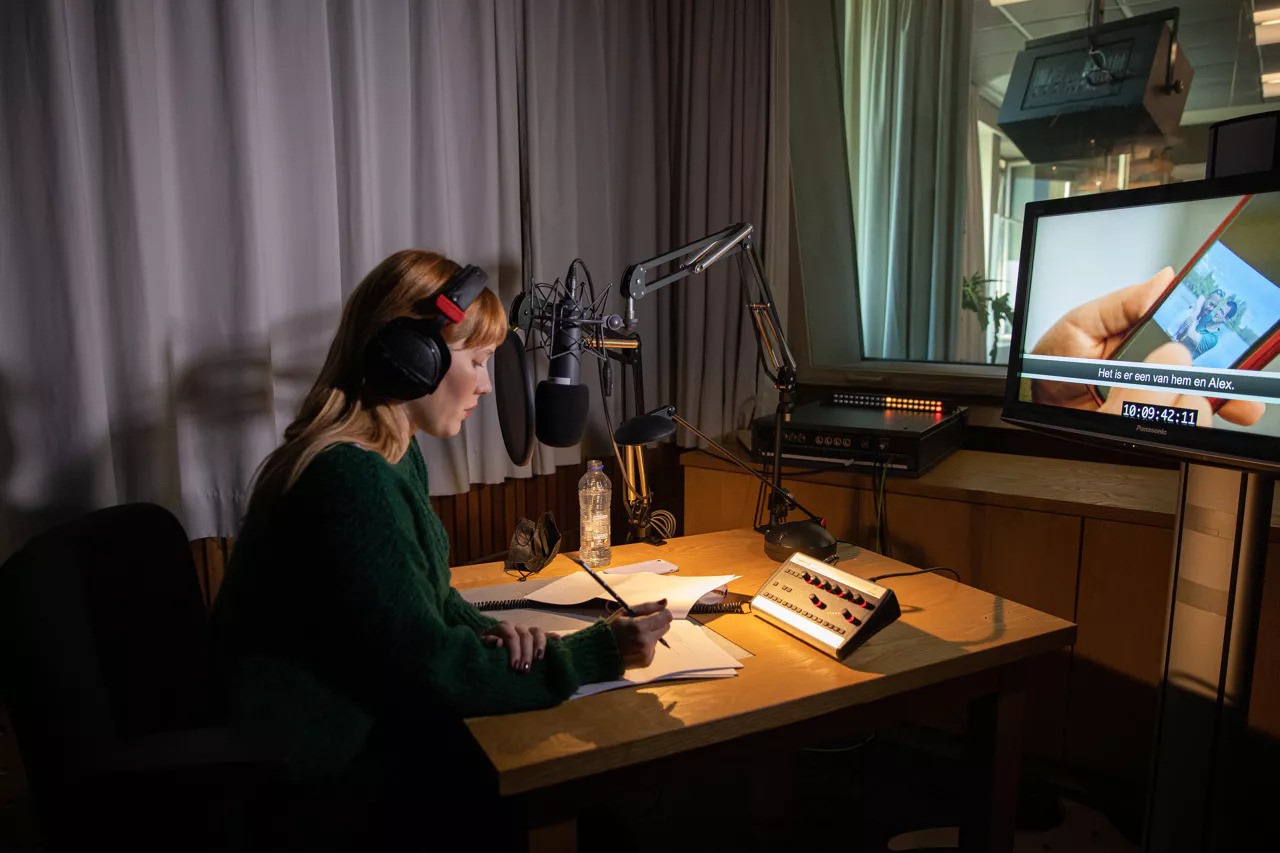
The power of teamwork
Audio description is teamwork. In pre-production, the AD writer delivers his text to the director for any adjustments. The final editor also checks it, watching over the style and checking for any language and spelling mistakes. Once the text is final, it is sent to the chosen voice. The latter rehearses the text, and then it's off to the studio. “In the recording studio, the sound engineer, voice and director work closely together. We constantly complement each other. Good preparation is absolutely essential for a successful reading session. Still, there is often some tinkering with the lyrics at the very moment. Sometimes you just feel that something is not working or that certain emphases need to be put a little differently. Mastering this is an art and often it's about gut feeling.”
Where in the past mainly Sunday night fiction received audio descriptors, we now see many other programmes getting this extra layer of narration as well. “Knokke Off (High Tides), for example, was a surprisingly fun programme to work on because there was a lot of cinematic approach. The makers often emphasised the poetry of the image and then we get the space to translate that poetry textually as well. That does give a certain creative satisfaction. With another programme like Dertigers (Thirties), which contains a lot of dialogue, it is then again the art of using very short sentences to still lay down an extra story.”
“Niks te zien (Nothing to see) is of course a special case. The content focus of the programme is already primarily on sound. That's why we chose to keep the audio description quite sober and create openings for the sounds in it. I think it is very positive to see that there is now a programme where the focus is not on the visual, but on audio.”


