Escape the Content Chaos: Navigating the User-Centric Era

On March 11th , Future Media Hubs collaborated with ESHAP to create a full day of programming at SXSW. Our session, ‘Next Now: The Future of Media’ was dedicated to creating a new media ecosystem and started with a keynote from media cartographer Evan Shapiro: The User-Centric Era. This article discusses insights from Shapiro's keynote on the arrival of the User-Centric Era and its outcomes. He highlighted both Future Media Hubs and Footprint Intelligence as two media organisations contributing to media innovation the User-Centric Era.
In today’s media landscape, consumers control how, when, and where they consume content, all with one device and a few swipes of their fingers. Their power over media today has a significant influence. Despite this, media companies fail to recognize and utilize this shift. Innovation in the media landscape has stalled since the launch of streaming. While Netflix pioneered this shift to streaming, subsequent innovations in their services have been limited. Despite the introduction of possible features like ad subscriptions, they fail to offer truly groundbreaking additions to their services. Many media players have followed, launching their streaming platforms across various mediums. However, this has led to an overwhelming amount of subscription options and content, resulting in consumer fatigue and unsustainable business models. The rush to switch from third-party to self-owned platforms has disrupted the media landscape, causing frustration for both consumers and companies alike.
From Creators to Consumers: The User-Centric Era
From roughly 1995 to the 2010s, media was primarily controlled by its creators, leaving decision-making in the hands of those with the ‘ivory tower’ perspective. The landscape transitioned from ‘powered by creators’ to ‘powered by consumers’, making the user the centre of content, data, and consumption dynamics.
While this transition into the User-Centric Era offers numerous advantages, such as fostering a more transparent ecosystem and promoting equitable value exchanges between users and platforms, it also introduces challenges. The abundance of content available on platforms like YouTube often leads to decision paralysis, prompting users to hop between platforms in search of valuable content. This paradox of choice fuels churning, a cycle of subscribing and cancelling subscriptions. Moreover, despite platforms' efforts to retain users, a significant portion remains with a serial consumption pattern, making the financial model unsustainable and ruining the user experience. In contrast to cable TV, where changing channels does not change the existence of the channel, dissatisfaction with new media often results in app deletion or subscription cancellation. Consequently, media companies lose out on the benefits of user engagement. Despite the evolution, many of these media companies still operate from an outdated ‘Ivory Tower perspective and refuse to recognize the media landscape has shifted.
Content is still King
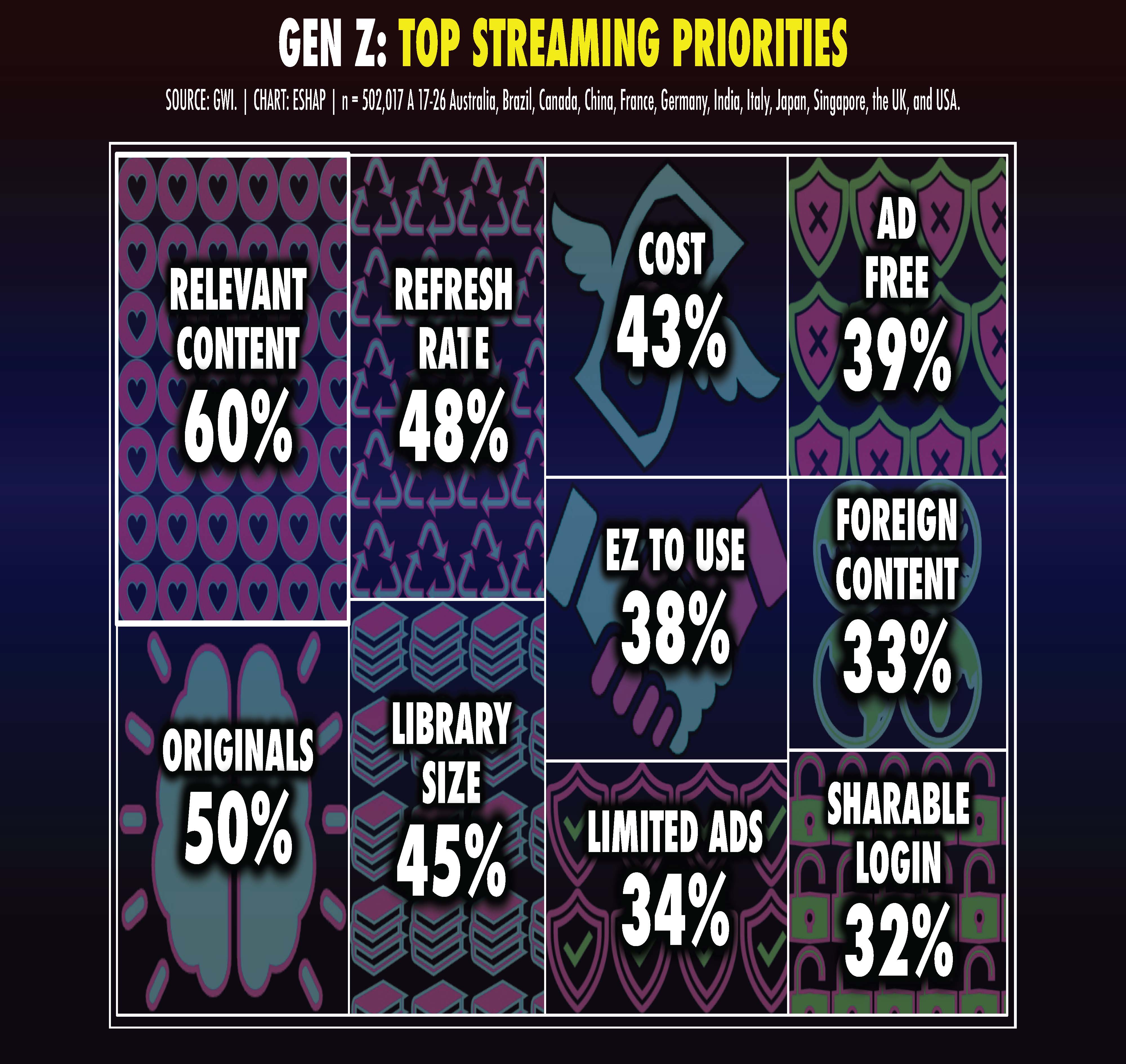
Ultimately, the key to keeping consumers from cancelling their subscriptions lies in identifying content that resonates enough to captivate users. To Gen Z this means content preferences, such as relevance, originality, update frequency, and library size, are most important. These are prioritized over all other factors, even the subscription fee, leading us to the conclusion that content is still king. It is the decision-making factor when it comes down to what platforms offer enough value to consumers to get a subscription.
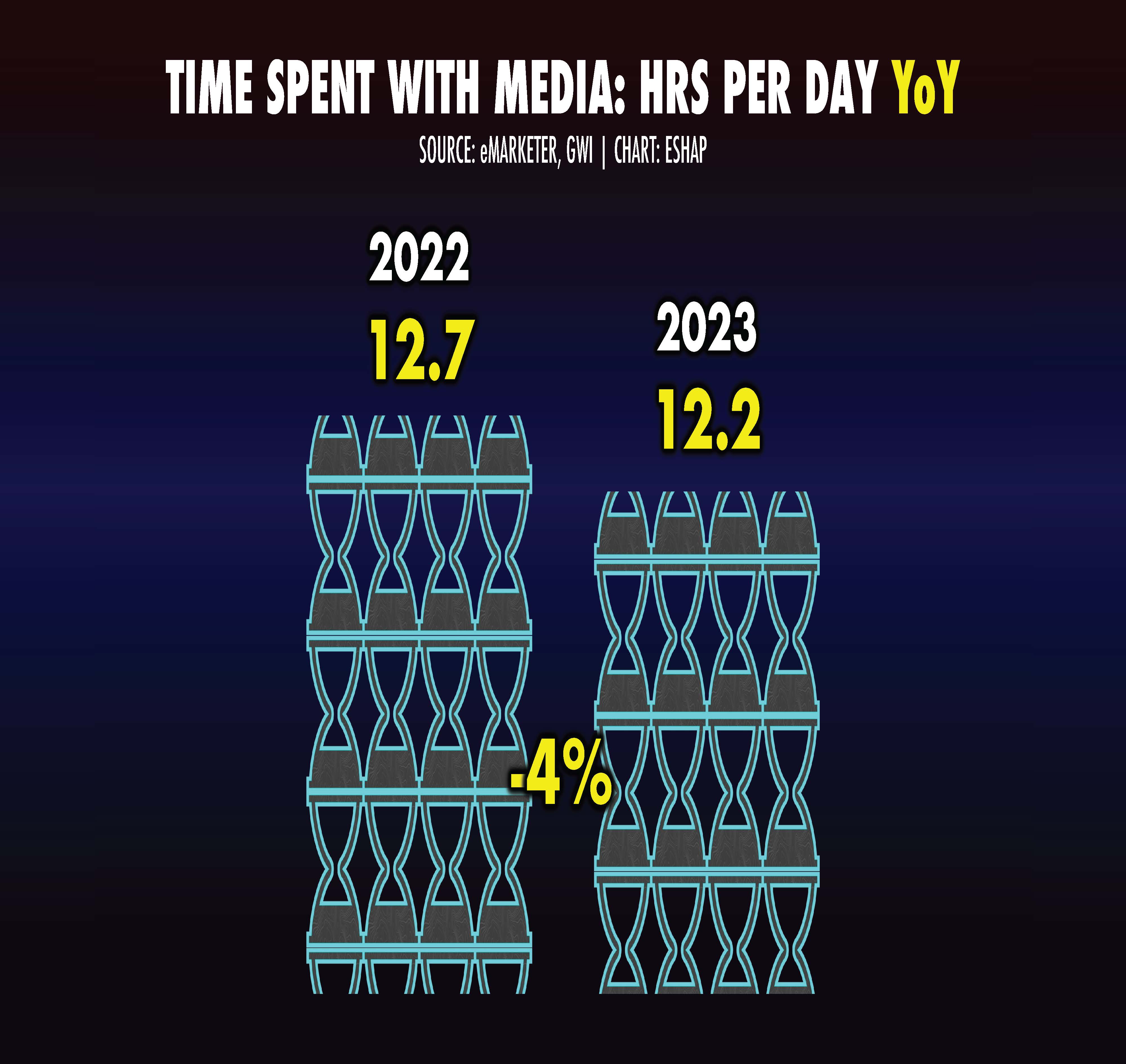
One streaming service alone has an enourmous library of content, already putting consumers in a tough spot. The number of platforms offering similar content further complicates matters. For the first time, content consumption is going down. From an average of 12.4 hours per day in 2022 to 12.1 hours in 2023, indicating a 30-minute decline in consumer engagement with media. Consumption of audio, gaming, video, and podcasts has decreased, while social media usage has plateaued, a consequence of the media's self-focused strategies, solving their internal issues rather than addressing the real concern: the audience’s dilemma of choice. For example: A necessity for another music platform didn't drive Apple Music's inception, but rather to generate more advertising revenue to solve their own needs which was making more money. This lead to the decline in media consumption as consumers are either returning to focusing on fewer services or engaging more in real-life activities.
So what is the solution and is there even a solution? How can we create cross-platform experiences that are both meaningful and tailored enough to captivate consumers? We don’t know, but no media organisation alone can solve these questions. The need for collaboration and putting aside competitive instincts is here.
Content is King, but Data is the Bloodline
The competition among major players who safeguard their data rather than sharing and collaborating is a key issue in the media industry. Without such collaboration, consumers receive insufficient recommendations, encounter repetitive ads, and have a bad user experience in general. Instead of treating data as a profit centre, it should be utilized as a tool to enhance user experience. While some say that data is the new oil, in the User-Centric Era community is the new oil. Quality data is essential for understanding consumers and their communities to deliver the most valuable user experience. However, media leaders continue to create new channels, further fragmenting the media ecosystem in terms of money, data, and content. This creates an even more complex ecosystem leading to an increasingly poor user experience and driving consumers back to traditional media outlets.
Consumer data is rightfully theirs, this is often emphasized by the media. However, despite this portrayal, the media uses it as their own, resulting in widespread consumer distrust. Trust plays a central role in media consumption, requiring investment from media institutions. Major players should prioritize transparency regarding data usage and collection practices and enable its integration with data from other platforms to enhance user experiences. This isn't solely about boosting sales or increasing impressions, it’s about highlighting the media's societal responsibility. Consequently, meaningful change becomes imperative: without action from media organisations, the increase in consumption will persist. Footprint Intelligence is a good example of how media organisations can employ data transparency to gain trust. On stage with us was Daniel Scholz, managing director at Footprint Intelligence, and he explained how they use data to promote radical transparency in carbon footprint management within media companies, using AI to prevent greenwashing.
The gatekeeping of data also impacts the advertising industry. Consumers are bombarded with repetitive ads that hold little value for them, contributing to the negative user experience. The limited control over data poses a significant challenge, highlighting the need for radical transparency, collaboration, and connectivity between companies. The media must recognize that data belongs to the consumers and prioritize their interests accordingly.

From Insight to Action: Embrace Transparency and Collaboration
As we step into the User-Centric Era, media organizations must prioritize transparency and collaboration as the next steps to innovate. Transparency is key to earning user trust, requiring openness in what we do and how we do it. Simultaneously, collaboration with other companies is needed to enhance user experiences by sharing insights and resources.
In conclusion, as we navigate the User-Centric Era, transparency, collaboration, and user-centricity emerge as guiding principles for media innovation. To delve deeper into these discussions and gain valuable insights, watch the full session here.
Stay tuned for our next article, where we explore the future of storytelling and monetization in New Media Experiences, unpacking the insights from our second session at SXSW.


