Meet the Makers: The Future of Broadcasting

The metaverse is blending the real and the virtual world more together every day. How can we use the newest technologies to improve traditional broadcasting? And in what way has the increasing need for virtual events impacted the experience for audiences around the world? From the magic of TouchDesigner to the universal control room and the virtual studio, VRT and RTBF dove into the virtual production space. Besides that, some of our international partners talked about how they turned their in-house problems into products.

Talk of the TouchDesigner
TouchDesigner is a multifaceted visual programming language that you can use to create new media workflows. With TouchDesigner, you do not need any coding experience. It allows you to program node-based, which means that you can connect different components to create your own prototype. But what can it do? About everything.
Geert Daelemans, Project Leader at VRT, has put the touch in TouchDesigner at VRT’s news studio. Traditionally during a news broadcast, the hosts and journalists follow a fixed script. By using a touchscreen in the studio, the presenter is given complete control of the video player. This makes it possible to switch to a live feed or modify the template when questions come in on air. In addition, VRT also implemented a pen feature, so the presenter can draw on the screen. Designs like these could be implemented quickly because there is almost no code programming involved.
Benjamin Poels, Systems Engineer at VRT, told us about how TouchDesigner supported the coverage of the 2020 Summer Olympic Games. Normally, there is only one linear broadcast channel, so a lot of the video feeds never reach the public. That is why Sporza decided to offer 3 online-only additional channels to cover the other competitions as well. That is where they ran into a few roadblocks. Sporza did not want to put out an incoming feed without any control, but since the broadcast was at night there was no big technical crew available. The solution was TouchDesigner: an easy, custom interface that allowed the journalists to control the system and automate their workflow. In the end, the technical operator monitors the video and audio while the content operator fills in the graphics system or announces what is happening on another stream. Once again, everything comes together on a touchscreen.
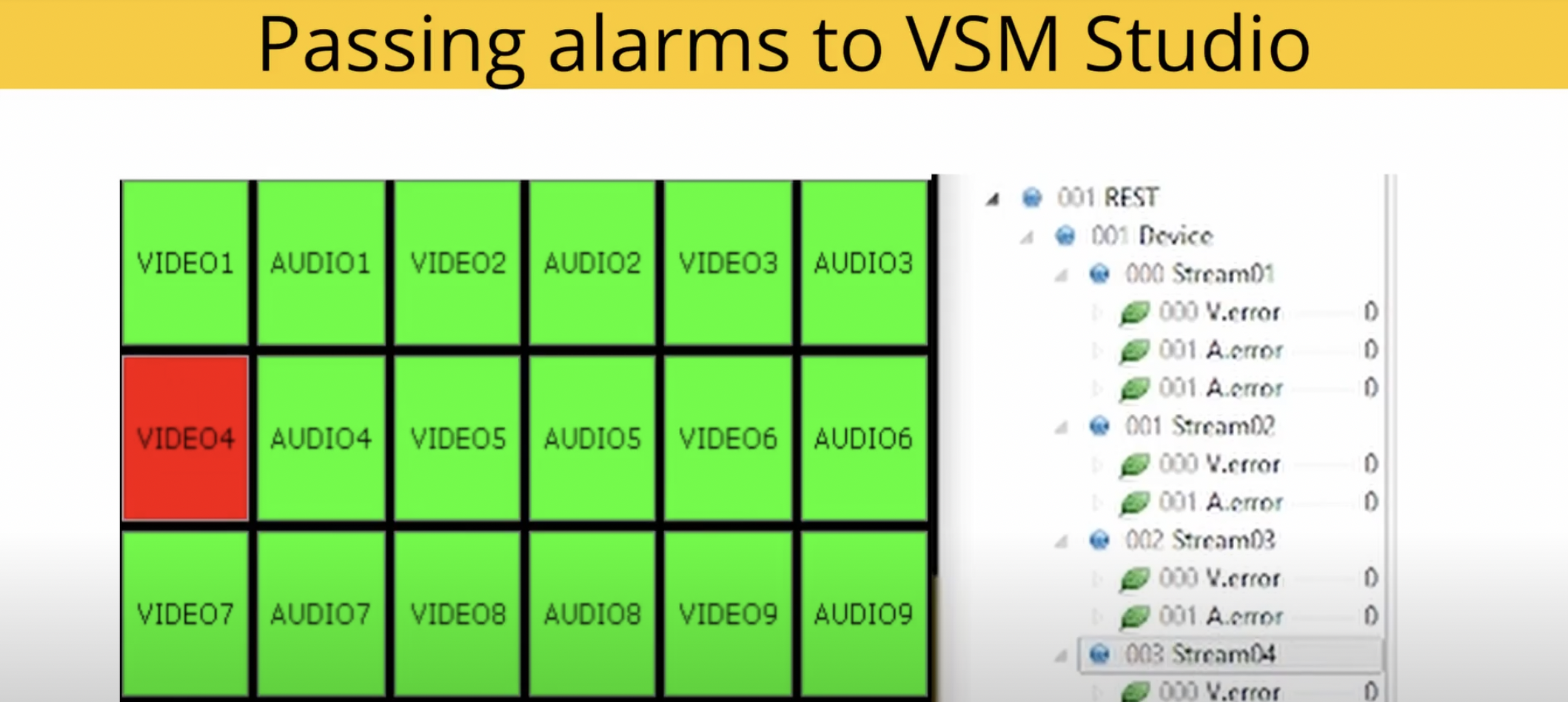
Thomas van Stee, also a systems engineer, knows all about what’s necessary to keep a live stream a-live. VRT has a bunch of HLS-streams it wants to deliver to the viewer at home, but a lot can go wrong between the media server and the viewers at home. That is why they created a system that immediately identifies if and where the transport of each stream fails. For the convenience of the operators, this “stream monitoring” solution in TouchDesigner was integrated with VSM Studio (Lawo) - a system that is already widely being used at VRT.TouchDesigner easily allows this by using its built-in” webserver” module that can flexibly communicate any combination of statuses and/or alarms to any system that supports HTTP.

Last, but not least, Floris Daelemans, who is an innovation researcher at VRT, talked about the possibilities of multicam with TouchDesigner. A lot of the latest projects wouldn’t even be possible if it wasn’t for the flexibility of TouchDesigner, because building it in a regular programming environment would simply be too expensive. Controlling 35 cameras placed all over the VRT compound through one custom panel that looks like a small video mixer? Challenge accepted.
More live streams, More problems
Since 2020, live streaming has become an indispensable part of broadcasting. Going from the classics like sports, to theater and even virtual events that previously would have been organized in person. How do we keep up with the workflow that this wave of technology brings with it?
Sacha Lagrillière is a producer at Yle, the Finnish public broadcaster. Yle had a constantly growing demand for immediate online publishing, but no streamlined workflow. They needed a system that was very easy to adapt once they decided which parts of a livestream to post on their platform. While developing an easy-to-use editing program for sports journalists, they wondered if it was possible for AI to watch the game instead and select the clips that are the most useful to them. In collaboration with a Finnish start-up called AI Spotter, they developed a product that was able to identify when a goal was scored during EURO 2020, create the highlights and write some metadata on top of that. The Automated AI-based video clipping originated out of a need for a backend that was not scattered around the company. By bypassing the established facilities and thinking in an agnostic way, Yle was able to let the journalists have more time for reporting instead of editing.
Agnoplay, a flexible video player that Mediahuis developed, also started with the question: how can we improve our in-house workflow? Patrick Knopjes, Operations Manager Video, started by analyzing the needs of the company. It appeared their live streaming was mostly done by embedding a YouTube or Facebook video player. A consequence of using one of those platforms is that you do not own the work. And that means no earnings. They decided to come up with a control-it-yourself solution: Agnoplay, a video player that Mediahuis controls from the front and centralized backend. This ensures the content creators can focus on what they are good at: creating content. Moreover, the commercial part is also important. Because it’s a flexible and scalable solution to an internal technical problem it was pretty easy to turn Agnoplay into a product.
but blend the new one with what you already have”
Something to keep in mind as a media company is to make sure you don’t only design for today or tomorrow. Is your product still gonna be useful in 3 years?
Fan Favorites
Another problem that turned into a product is the Red Bull Virtual FanZone. Simon Pircher, Senior Project Manager Innovation at Red Bull Media House, told us how the pandemic changed the way professional athletes interact with their fans. When in July 2020 the Formula 1 season was resumed, spectators weren’t allowed yet. He asked himself: “How can we host a virtual event, but still create a thrilling experience for the people at home?” Then there was the idea of a virtual meet-and-greet. By integrating Microsoft Teams into a simple computer stand, some lucky fans could dial in and meet the drivers.
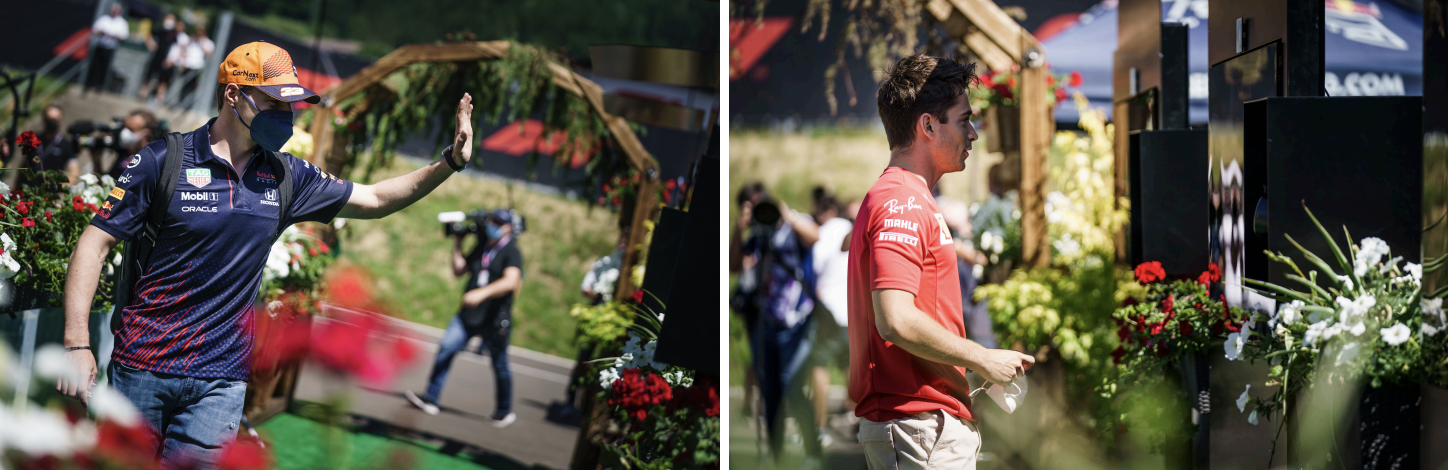
Red Bull used their Virtual FanZone again at the biggest ski race in the world. During the 2020 Summer Olympic Games a similar setup was used in order for families of the athletes to dial in to support them. That is when Red Bull began to wonder about the potential to turn the Virtual FanZone into a product. They decided to build a proper set-up with better video and audio equipment.
But what does this have to do with the future of broadcasting? The demand for virtual interaction is growing and there is a lot of potential for using the Virtual FanZone during interviews. Simon Pircher started seeing this originally one-hit-wonder as a way to combine physical events with a virtual way for fans or press to interact with the athletes.
Caution: the unlocking of the metaverse might result in some serious creativity
VRT and RTBF are constantly looking for new ways to innovate their ways of production. In massive media companies it is easy to stay within the bubble of your division, but by collaborating with other departments a lot of interesting things can happen in a rather short amount of time.
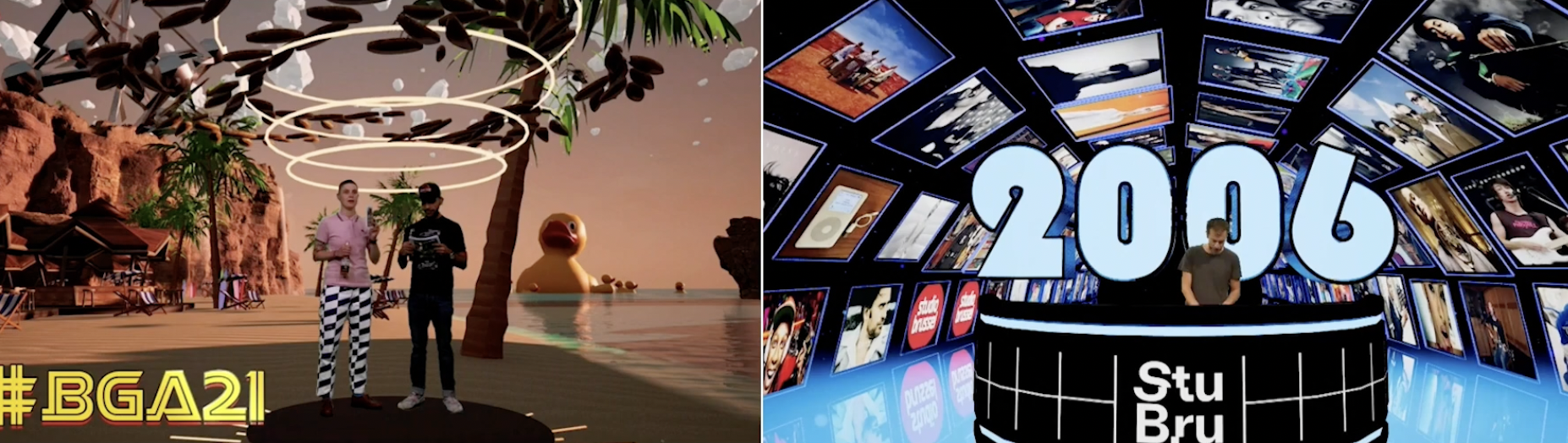
Although virtual production is nothing new for broadcasters (think about the weather forecast for example), a VR experiment for children inspired the innovation department at VRT to use the game engine Unity and build a virtual studio. During several internal events, VRT optimized its virtual production workflows. In 2021, they started using the virtual studio for several external events and programs. By combining different expertise and backgrounds it was possible to host the Belgian Game Awards in a fully virtual environment: a match made in heaven. This resulted in a graphically impressive show, while the team backstage only needed a green key, a wooden stage, an image mixer and a stream deck. There are no limits to what you can do in virtual production. There is only one downfall: knowing when you have to stop. Because when people see the creative power of this tool, they only get more ideas.
While VRT is busy building virtual worlds, RTBF is building a concrete one. Hugo Oritz, Innovation Officer at Wallonia public broadcaster, presented the universal control room RTBF is building at their new headquarters called Media Square. The universal control room will ensure radio, tv and digital content can all be produced within the same structure. The goal is to put all the functions that are necessary to produce a show into a common set of user interfaces that can be designed and moved around. Technologically that means that the different worlds of video, audio and lighting will be integrated into one infrastructure. This will be a huge improvement in terms of efficiency, since RTBF will be able to produce more content with the same resources.
Back to the future
The future of broadcasting is looking bright. The first thing to remember is: research, research and more research. Find out what your user needs, instead of creating an intricate system just because you can. Besides that, it is all about collaboration. Some unexpected allies are of immense value when you have to think out-of-the-box. Hugo Oritz said it perfectly: “Innovation is about trying things, and sometimes it works.”


