An exclusive look into how NRK's most successful articles are created

Many important news stories are easy to overlook. Topics like pensions, national budgets or global trade policy usually do not attract much attention from younger readers. However, Norwegian public broadcaster NRK found a way to make these subjects engaging, visual and highly relevant.
NRK’s Head of Editorial Development in the News Department, Reidar Kristensen, shared how the broadcaster changed its workflow to produce some of its best journalism: they formed a permanent team where journalists, designers, and developers work together from the start. The team is called ‘Visuelt fortalt’, which is Norwegian for ‘visually speaking’.
The result is unique reports that help audiences understand complicated stories through explanation, interaction and strong visual storytelling.
From separate worlds to one shared team
NRK started with the familiar newsroom problem where journalists, designers and developers all work in very different ways: reporters handle fast deadlines and breaking news pressure, while developers and designers often work on different rhythms. All in different teams, and some even in different parts of the organisation.
That gap makes collaboration difficult, especially when major breaking news events demand fast and clear storytelling. NRK realised that occasional cooperation was not enough. If they want to create better explanatory journalism for moments when bigger and younger audiences come to their channels, they need a completely new setup. So NRK created a dedicated team in the middle of the newsroom with one clear mission: produce special digital stories on major topics and events by combining journalism, design and development as equals.
As each story gets roughly one to three weeks to complete, team members are shielded from the constant breaking news cycle. This system gives them the freedom to decide both what to make and how to make it without the usual pressure of a big newsroom. That autonomy matters. It gives the team time to build trust, develop a shared culture and move beyond the great old divide between “the tech people” and “the news people.”
Storyboarding before writing
One of the biggest shifts at NRK was changing the moment when collaboration starts. Instead of starting with a journalist and adding visuals later in the process, the whole team begins together and develops the idea.For each new project, they physically storyboard the story with sticky notes. Text ideas, graphics and interactive elements are mapped out before a single draft is written or a line of code is produced. This means everyone contributes from day one and can shape the user journey together.
This strengthens both the ideas and the production process. Since the team agrees on the structure and concept early on, journalists, designers and developers can work on their parts at the same time, instead of waiting on each other. It also opens the door to ideas that would likely never emerge in a traditional newsroom structure. One of NRK’s most successful stories, which explained the national budget by showing readers a personalised receipt of how their tax money is spent, came from a developer rather than a political reporter.
Making boring topics personal
A strong example of boring topics made personal was NRK’s work on pensions. The topic was important, but the journalists knew younger audiences would likely scroll past a traditional article about new pension rules. So instead of writing a standard news article, the team built an interactive pension calculator. Users could enter their age, monthly savings and starting point, then see how much money they could end up with by retirement under different savings scenarios.
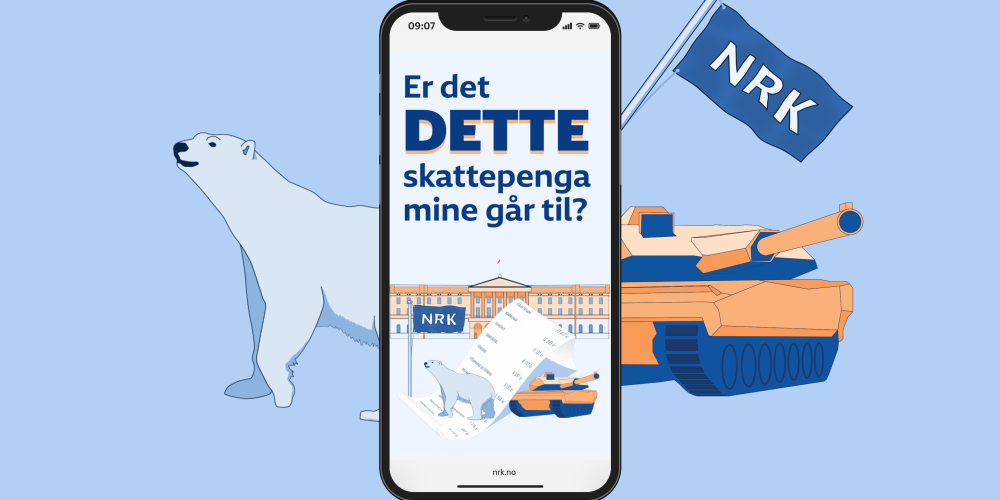
This changed the relationship between the story and the audience. Rather than reading about a political decision in abstract terms. Users could directly see how important their personal, additional savings are and how much the different savings forms mean for their future.
The results were striking: the story became NRK’s single most-read story of 2024 on its website, reaching 1.2-million-page views. The youth share of the audience was well above average, and 97% of users interacted with the input fields to personalise the experience. The lesson was simple but powerful: if a story feels directly relevant to the person holding the phone, even a topic like pensions can perform exceptionally well.
Explaining chaos when the world gets noisy
NRK used the same thinking in a very different kind of story: global trade tensions. When headlines were dominated by fears of a trade war, the newsroom noticed that audiences were struggling to understand the broader picture and its consequences.
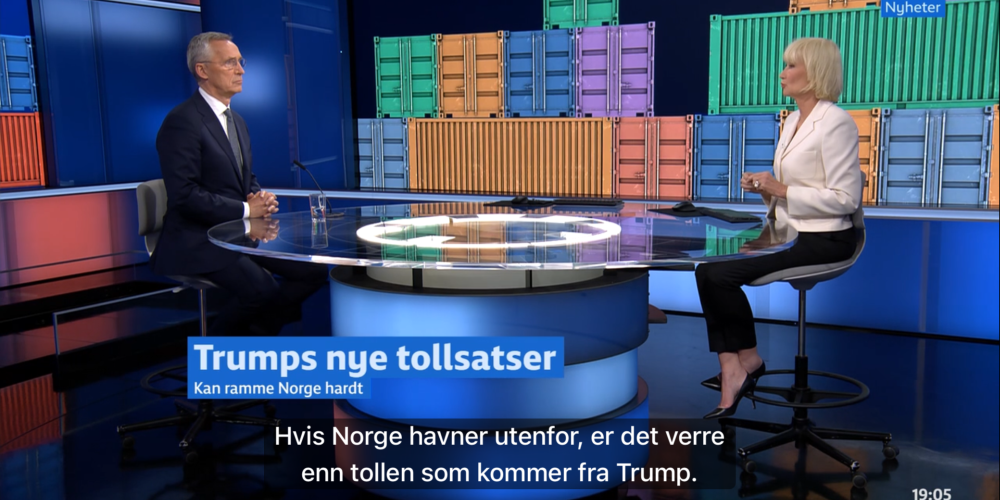
Rather than adding yet another fast update to the news cycle, the team stepped back and created a visual deep dive explaining what the trade conflict meant for Norway, Europe, and the wider global economy.
Again, the performance was impressive: the piece reached 1.2-million-page views and became one of NRK’s most-read articles of 2025. Just as importantly, it was built with a distinct visual identity that could be reused across platforms, including the website, radio app and television broadcasts. That gave the story a recognisable footprint across different platforms.
Building buy-in through proof
Creating this kind of team was not easy. Reidar explained that the biggest challenge was internal buy-in. At NRK, most of technology and design is located in a different division and even a different building from the newsroom. Earlier attempts to collaborate during major breaking news situations had had mixed results.
What helped was treating those failed attempts as learning opportunities. After each effort, NRK evaluated what went wrong and what could be improved next time. Over time, this created a shared sense of ownership around the problem. From there, the case for a permanent team became easier to make. All parties saw that effective cross-functional teamwork had to grow through collaboration over time, with a dedicated team that could develop its own methods and workflows in more peaceful times.
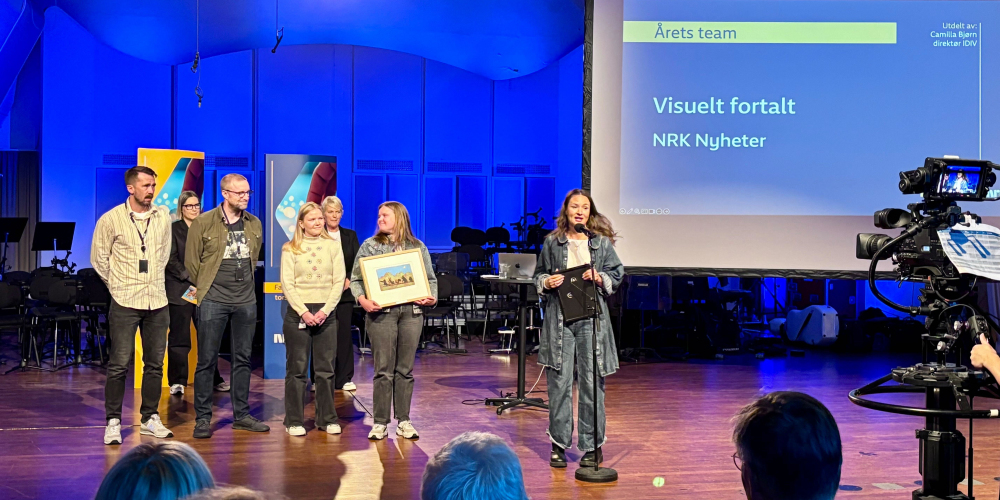
The team's success has since helped change perceptions internally. What started as an experiment is now widely seen as valuable and was awarded the internal ‘Team of the Year’ prize in 2025. NRK also used the team to build broader collaboration skills by occasionally inviting specialist reporters to individual projects.
Key takeaways for media organisations
For other publishers, NRK’s case offers a clear reminder that better digital storytelling is not only about tools. It is about structure, culture and workflow.
- Cross-disciplinary journalism has to begin at the idea stage. When design and technology are brought in only at the end, the newsroom misses opportunities to create more original and more effective story formats.
- Autonomy matters. Teams need the freedom to experiment, build trust and produce work that stands out.
- The user needs to stay at the centre. Whether through a calculator, a personalised visual or a strong explainer format, the core question remains the same: why should this story matter to the person reading it right now?
NRK’s implementation of a dedicated cross-disciplinary team shows that when you give journalists, designers and developers the time and space to truly work together. It creates a new way of doing journalism, one that can turn complex public-interest topics into some of a newsroom’s strongest-performing stories.


