10 tips for Constructive Journalism

We live in a world where bad news often dominates journalism: disasters, conflicts, wars and scandals flood our headlines. Too often, crucial parts of the story are missing, such as solutions, context and nuance. As a result, more and more people are avoiding the news, feeling depressed. It is not uncommon to hear the words: “I’d rather be ignorant and happy, than informed and miserable.” The solution for this challenge: constructive journalism.
What is constructive journalism?
Many of you may already be familiar with this concept, but let me give you a quick refresher of what constructive journalism is: Constructive journalism brings journalism back to what it is supposed to be – to inform and not impress audiences. It offers them a more nuanced image of the world, points to solutions and creates dialogue between people.
From inspiration to action
Ingrid Timmermans (NRK) presented an interesting case on constructive journalism during one of our News Hub meetings, read the article here. When Aurélie Didier, Deputy Director News at RTBF, heard Ingrid speak about how she made NRK’s newsrooms constructive, she was immediately inspired, and she wanted to bring constructive journalism to RTBF news. Check out why and how they do it, in this testimonial!
Let's get started!
Now that we’ve covered what constructive journalism is and got into a powerful testimonial of one of our members, it’s time to move from reflection to action. You too can make your news more constructive! To support you, we’ve put together a practical guide with 10 action points that you can apply directly in your daily work or share with colleagues. Let’s roll up our sleeves and start shaping a more constructive future for journalism, together!
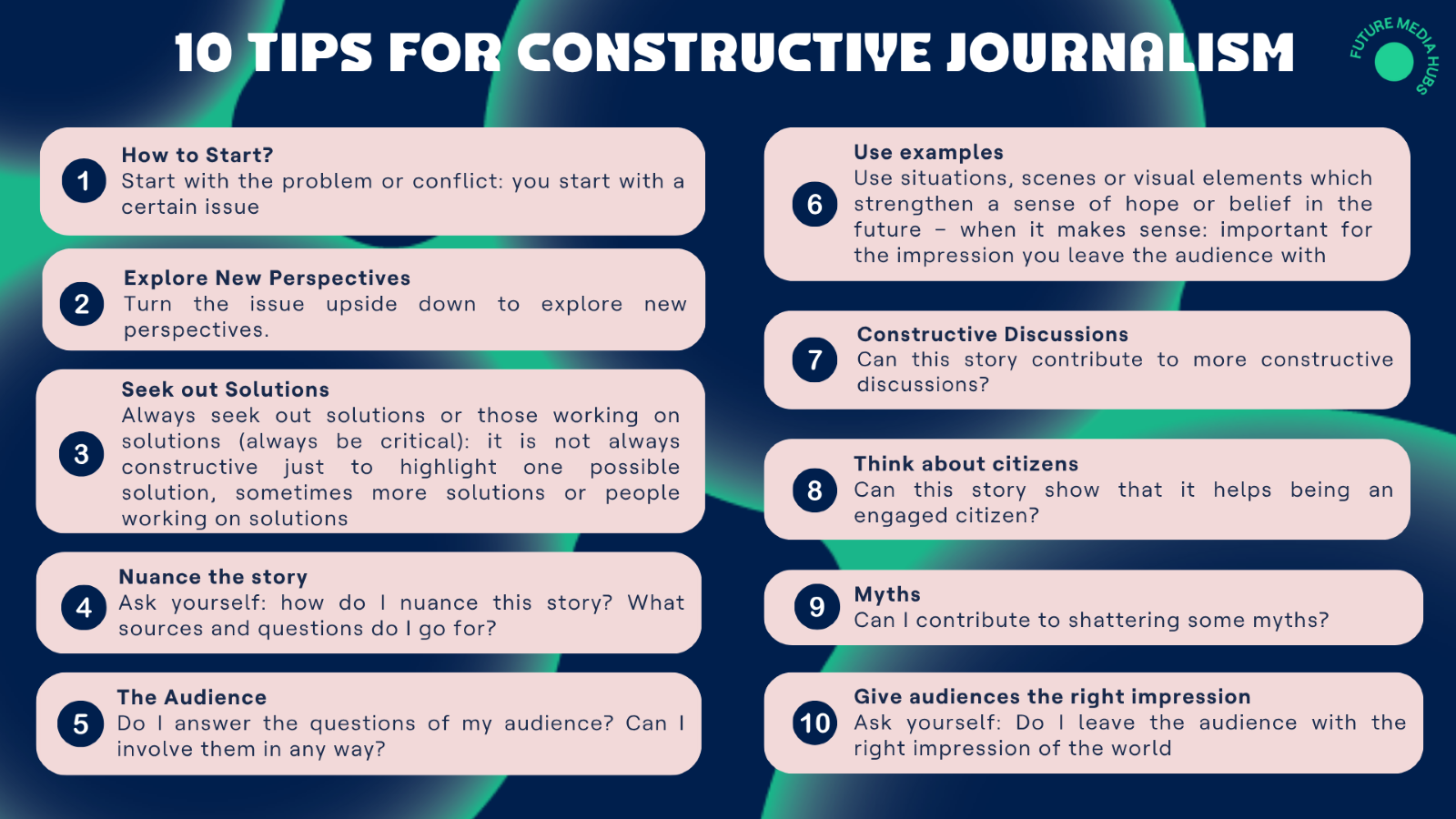
Practical guide made by Juliette Spapens based on insights Ingrid Tinmannsvik


