How to combat news avoidance in young audiences

The news often portrays a grim image of the world, leading to news avoidance among young people. According to Statistics Norway in 2021, 18% of 18 to 24-year-olds avoid the news. This trend is even more pronounced in other countries: 42% of young audiences in the USA and a staggering 46% in the UK avoid news altogether. Many young people feel that the world is deteriorating and prefer not to witness it. In response, NRK, the Norwegian public broadcaster, aims to present news with more hope.
Reducing polarization through dialogue
There is a strong need for solution-based journalism across all media, and NRK has taken a significant step in this direction with Lyspunkt. Recognizing its responsibility as a public broadcaster, NRK launched a website dedicated to hopeful and constructive news. This site garnered 3 million page views from a population of 5 million Norwegians, quickly gaining attention, particularly among younger audiences.
Solution-based journalism is only one part of the equation. NRK is committed to constructive journalism, striving to develop democracy by presenting a nuanced image of the world, highlighting solutions and reducing polarization through dialogue. With the goal of embedding constructive journalism throughout NRK, this approach has become integral to the public broadcaster's culture. Questions such as "Can we turn this issue upside down?" and "Who is trying to solve this problem?" guide NRK's approach to creating more engaging and constructive news.
Offering solutions
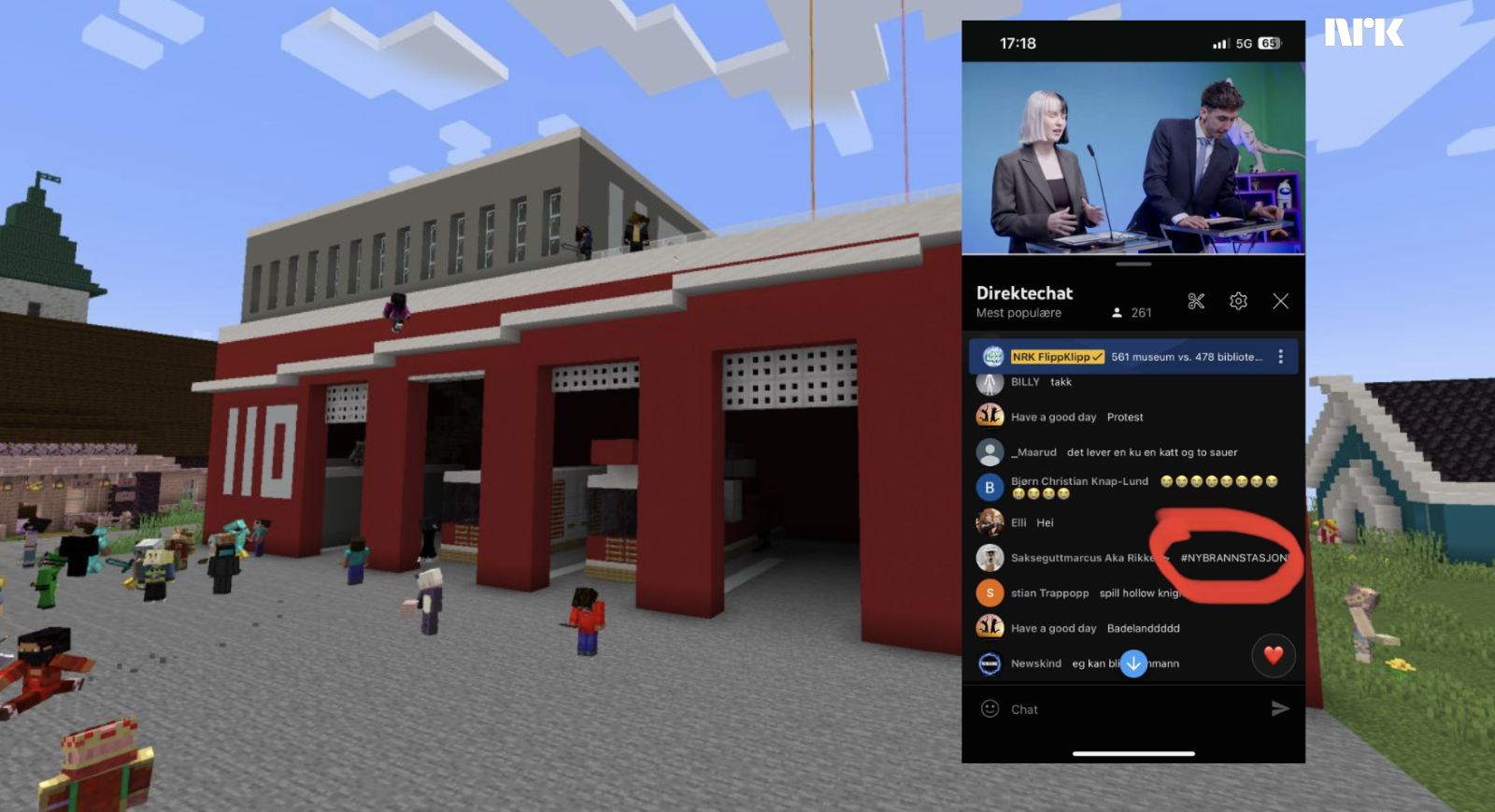
But can ‘happy stories’ be considered real journalism? NRK believes the news remains the news, but it approaches articles differently to help young people who might struggle with topics like death and grief. Rather than stopping at the problem, NRK now aims to offer solutions. They believe that constructive and critical journalism can coexist, fostering democratic debate. For example, during the local elections, NRK's news department organized a constructive town hall meeting in the game Minecraft, encouraging live audience participation and creating a platform for positive engagement with local politicians.
Ingrid Tinmannsvik, journalist at NRK, has embarked on a ’constructive tour’ to help each department set goals and understand what constructive journalism means for them. This initiative has made NRK the first public broadcaster to implement constructive journalism across various departments, not just the news.
Currently, NRK is focusing on artificial intelligence to measure the constructiveness of articles. ’DoktorNyhet’ is a platform related to news or information and curated by a figure or entity named ’Doktor’. It delivers updates, insights, or analyses on various topics, possibly with a focus on health or medical-related news. By using OpenAI technology, ’DoktorNyhet’ has a 93% accuracy rate in assessing constructiveness.
Conclusion
So, how does this affect the young audience that this initiative targets? NRK emphasizes explaining the news in a language young people understand and focusing on topics that matter to them, rather than simply trying to impress. By deleting its Facebook news page, NRK also aims to redirect audiences to its own platform, which offers explainer videos and fosters constructive debate.
In conclusion, this case demonstrates the power of our words with the audience. By incorporating inclusive visual and explanatory elements in breaking news, promoting inclusive debates and answering audience questions, NRK aims to bring more nuance to stories and offer solutions for the future.
Check out how their story began, featuring an insightful interview with Ingrid Tinmannsvik, and dive deeper into the topic.
https://www.futuremediahubs.com/next-generation-hub/news/lyspunkt-shining-light-positive-news


